There is a very specific kind of joy that comes with buying a new computer. You bring the box home, you slice through the tape, and you smell that distinct “new electronics” scent. It represents potential. It is a blank slate where you will do your work, play your games, and connect with the world. But there is also a moment of dread that follows the excitement. You turn it on, and you are greeted with a barrage of questions, loading screens, and pop-ups asking you to sign up for trials you don’t want.
Many people make the mistake of rushing through this process. They click “Next, Next, Next” just to get to the desktop, and then they wonder why their brand-new laptop feels slow or annoying a week later. The truth is that the way you set up your computer in the first few hours determines how it will behave for the next few years. A proper setup isn’t just about plugging it in; it is about taking control of the machine. It is about removing the junk, securing your data, and optimizing the settings so the computer works for you, not the other way around. In this guide, we are going to walk through the entire process of setting up a new computer or laptop in 2026. We will use simple, plain English to explain exactly what to do, step by step, to ensure your new machine runs perfectly from day one.
Unboxing and Physical Setup: Getting the Ergonomics Right
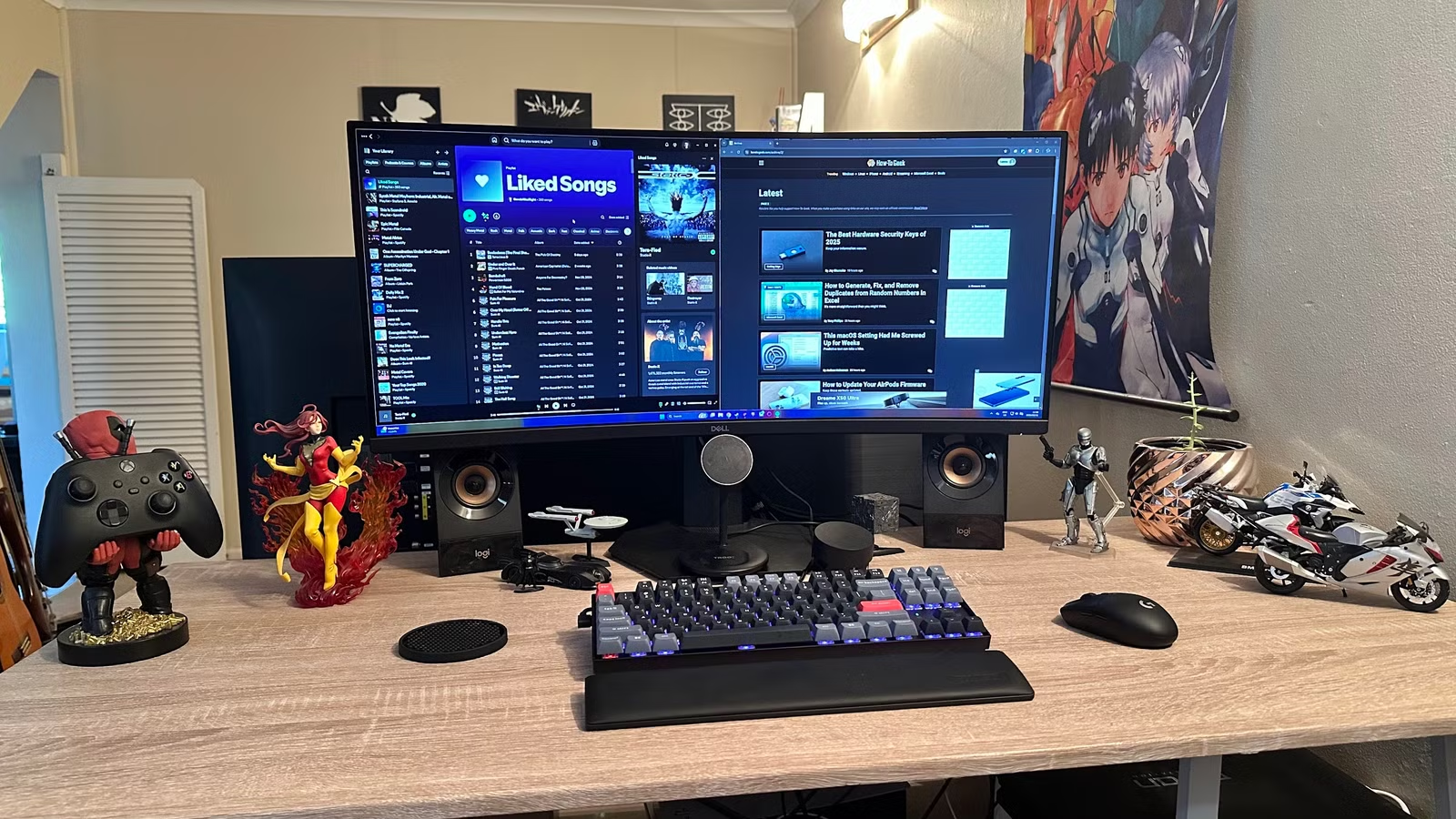
The setup begins before you even press the power button. Where you put your computer matters. If you have a desktop, you need to think about airflow. Computers hate heat. If you shove your new tower into a closed cabinet or put it directly on a thick carpet, the fans will suck in dust and the heat will build up, killing your performance. Place it on a desk or a small stand where it can breathe. If you have a laptop, think about your neck. Looking down at a screen for eight hours a day is a recipe for pain. Consider getting a laptop stand to raise the screen to eye level and using an external keyboard and mouse.
Once you have the spot picked out, look at the ports. In 2026, many laptops have switched almost entirely to USB-C ports. If you have older USB drives or a wired mouse, you might need a “Dongle” or a hub. Plug your power cable directly into a wall outlet or a high-quality surge protector. Do not use an old, cheap extension cord for expensive electronics. A surge protector is cheap insurance against lightning strikes or power spikes that could fry your motherboard in a millisecond. Also, keep the box! I know it takes up space, but if you ever need to return the computer or move to a new house, having the original styrofoam packaging is the safest way to transport it.
The First Boot: Navigating the Initial Configuration
When you press the power button for the first time, you will enter the “Out of Box Experience” (OOBE). This is where Windows or macOS asks you a million questions. It will ask for your language, your region, and your Wi-Fi password. Take your time here. When it asks to connect to Wi-Fi, do it, because it allows the computer to check for critical updates immediately.
The most important choice you will make here is about your account. The computer will strongly encourage you to sign in with a Microsoft Account (for Windows) or an Apple ID (for Mac). I highly recommend doing this. While you can create a local offline account, using an online account gives you huge benefits in 2026. It automatically backs up your settings, your wallpaper, and your passwords to the cloud. If you lose your laptop tomorrow and buy a new one, signing in with that same account will restore everything instantly. It also helps with security, allowing you to locate your device if it gets stolen. When it asks for permission to track your location or send diagnostic data to the manufacturer, I usually select “No” or “Basic” to protect my privacy. You can always change these later, but it is easier to lock it down now.
The Great Purge: Removing Bloatware and Junk
Here is the dirty secret of the computer industry: computer manufacturers get paid to install junk on your new PC. When you reach the desktop for the first time, you will likely see icons for a random antivirus you didn’t buy, a few games you will never play, and trial versions of software you don’t need. This is called “Bloatware,” and it slows your computer down immediately.
Your first job is to be a digital janitor. Go to Settings > Apps > Installed Apps. Scroll through the list slowly. If you see “McAfee” or “Norton” trial versions, uninstall them. Windows has excellent built-in security now, so you don’t need these heavy programs slowing you down. If you see “Solitaire Collection” or “Wild Tangent Games,” uninstall them. If you see a “Support Assistant” from the manufacturer (like Dell or HP), you can keep that, as it helps with driver updates, but remove almost everything else. Be ruthless. A clean computer is a fast computer. If you aren’t sure what a program does, Google the name. If the internet says it is bloatware, get rid of it. This process frees up storage space and stops these programs from running in the background and eating your battery life.
Updating Everything: The Critical Security Step
You might think your new computer is up to date because you just bought it, but that is rarely true. That computer might have been sitting in a box in a warehouse for six months. In those six months, hundreds of security holes have been found and fixed, and new features have been released. If you don’t update immediately, you are vulnerable.
Go to Settings > Windows Update (or System Settings > General > Software Update on a Mac) and click “Check for Updates.” It will likely find a huge list of things to install. Let it do its work. You will probably have to restart the computer, go back to settings, and check again. Do this repeatedly until it says “You are up to date.”
But don’t stop there. You also need to update the “Apps.” On Windows, open the Microsoft Store app, go to the Library, and click “Get Updates.” This updates the calculator, the mail app, and other core tools. Finally, if you are a gamer, you need to update your Graphics Card drivers. Do not rely on Windows for this. Download the official app from NVIDIA, AMD, or Intel and let it install the latest “Game Ready” driver. This ensures your games run smoothly and your screen looks crisp.
Installing Your Essential Software Stack
Now that the system is clean and updated, it is time to make it yours. You need to install the tools you actually use. In the past, this meant going to twenty different websites, downloading installers, and clicking “Next” a hundred times. In 2026, there is a better way.
Use a bulk installer website like Ninite. You go to the site, check the boxes for the apps you want (Chrome, Zoom, Spotify, VLC, Discord, etc.), and it gives you one single small installer file. You run that one file, and it automatically downloads and installs everything in the background without asking you any questions. It even automatically says “No” to any toolbars or junk software those apps try to sneak in. It saves hours of time.
If you are a professional or a power user, consider using a “Package Manager” like Winget (on Windows) or Homebrew (on Mac). These allow you to install software by typing a simple command, which is faster and cleaner than downloading files from the web. For example, typing winget install firefox in the terminal will grab the latest version of Firefox instantly. This keeps your “Downloads” folder clean and ensures you are getting the official, safe versions of every app.
Security and Privacy: Locking Down Your Digital Life
We touched on this during the first boot, but now we need to dig deeper. Security is non-negotiable. The good news is that Windows Security (built-in) is fantastic. Open it up and make sure “Virus & threat protection” is turned on. You don’t need to pay for a third-party antivirus unless you are visiting very risky websites.
However, you do need a Password Manager. If you don’t have one, now is the time to start. Tools like Bitwarden or 1Password are essential. Install the browser extension. This allows you to create strong, complex passwords for every website and save them securely. Do not use the same password for your email and your bank.
Next, check your privacy settings. Go to Settings > Privacy & security. Go through the list of permissions. Does the Camera app need access to your location? No. Does the Weather app need access to your microphone? Definitely not. Turn off the permissions that don’t make sense. Also, look for “Ad tracking” or “Advertising ID” settings and turn them off. This stops companies from building a profile of you based on what you click. Taking ten minutes to lock these doors now will protect your identity for the life of the computer.
Setting Up a Bulletproof Backup Strategy
The most tragic thing that can happen to a computer user is losing their data. Hard drives fail. Laptops get stolen. Ransomware happens. If your files only exist in one place, they are waiting to be lost. You must set up a backup system immediately.
The easiest method is Cloud Backup. If you signed in with a Microsoft or Apple account, you probably have some free storage in OneDrive or iCloud. Turn on the “Desktop and Documents Sync.” This means that anything you save to your desktop is automatically uploaded to the cloud. If you pour coffee on your laptop tomorrow, your files are safe in the cloud.
However, the cloud isn’t enough. You should also follow the “3-2-1 Rule.” Have three copies of your data, on two different types of media, with one offsite. Buy an inexpensive external USB hard drive. Plug it in and set up “File History” (Windows) or “Time Machine” (Mac). These tools automatically back up your files every hour when the drive is plugged in. It happens in the background. You don’t have to remember to do it. If you accidentally delete a file, you can “go back in time” and retrieve it.
Personalization: Making the Computer Feel Like Home
Now that the boring technical stuff is done, you can have some fun. Customizing your computer makes it more enjoyable to use. Start with the “Dark Mode” setting. Most people find Dark Mode easier on the eyes, especially if you work late at night. Go to Settings > Personalization > Colors and choose your mode.
Change your wallpaper to something that makes you happy. A picture of your family, your pet, or a favorite landscape. Organize your Start Menu or Dock. Unpin the icons you don’t use (like the Edge browser if you use Chrome) and pin the ones you do use (like Word or Spotify).
You should also adjust the “Scale and Layout.” In Display Settings, you can change the size of the text. On modern high-resolution screens, the text can sometimes look tiny. Bump the scale up to 125% or 150% so you don’t have to squint. Also, configure “Night Light” or “Night Shift.” This feature turns the screen slightly orange in the evening to reduce blue light, which helps you sleep better if you are using the computer before bed.
Optimizing for Performance and Battery Life
If you have a laptop, you want it to last all day. Windows has “Power Modes” that control this. Click the battery icon in your taskbar. You will usually see a slider or a menu. When you are plugged into the wall, set it to “Best Performance.” This lets the processor run at full speed for gaming or heavy work. When you are on battery, set it to “Balanced” or “Best Power Efficiency.”
You should also check your “Startup Apps” again (we mentioned this in the bloatware section, but it is worth a double-check). Open Task Manager and go to the Startup tab. Disable anything that you don’t need immediately. This makes your boot time lightning fast.
Another pro tip is to use “Storage Sense.” Go to System > Storage and turn it on. Configure it to automatically delete files in your Recycle Bin and Downloads folder every 30 days. This prevents your hard drive from getting clogged up with junk over time. It keeps the computer running as fast as it did on day one.
Final Maintenance Routine: Keeping It Fresh
Congratulations! Your computer is now set up perfectly. It is clean, secure, backed up, and personalized. But just like a car, it needs maintenance to stay this way. You don’t want to do all this work just to let it rot in six months.
Set a recurring reminder in your calendar for once a month. Call it “PC Health Check.” On that day, do three simple things. First, check for updates again (Windows and Apps). Second, run a quick virus scan just to be safe. Third, restart your computer. Many people just close the lid and let the computer “sleep” for weeks. A full restart flushes the memory and fixes tiny glitches that build up over time.
Also, physically clean it. Buy a can of compressed air and blow the dust out of the keyboard and the vents. Dust is the enemy of electronics; it traps heat and kills batteries. Wipe the screen with a microfiber cloth (no harsh chemicals!). By spending fifteen minutes once a month on maintenance, you can extend the life of your computer by years. You have built a powerful, efficient machine. Now, go enjoy using it!